- January 8, 2015
Post
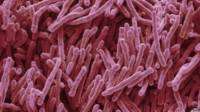
Scientists from the US claim to have found a new way to create antibiotics that can help combat the growing number of infections that are resistant to drugs in this category.
Researchers at Northeastern University in Boston, USA have developed a method of growing bacteria in soil under laboratory conditions.
Their study, published in the journal Nature, has led to the discovery of 25 new antibiotics, one of which – teiksobaktin – shown to be effective in the treatment of mice against infections that are resistant to drugs.
If human trials are successful, the new drug could be the first of a new class of antibiotic for nearly 30 years.
The peak of discovery of new antibiotics occurred in the 50s and 60s of the last century, but in 1987 there was created a single new drug of this type.
Since then, an increasing number of infections that exhibit resistance to known antibiotics. The most dangerous of these is tuberculosis pathogens which once easily suppressed with antibiotics such as penicillin, and now do not respond to any known drugs.
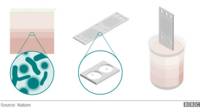
A team of US researchers has created a special device for the cultivation of bacteria present in the soil. It is compared with the “underground hotel.” In this device each compartment was placed the same bacteria species, and the entire device was buried in the ground.
This is allowed to reproduce the natural living conditions of the bacteria and at the same time to observe their growth.
Such bacteria are grown under controlled conditions, release substances that have antimicrobial properties.
The head of the research team, Professor Kim Lewis stated that one of these substances – teiksobaktin – is a very promising antibiotic.
| 1. Millions of bacteria live in the soil, but most of them can not be grown in the laboratory | 2. Each compartment of the unit placed one type of bacterium | 3. The whole setup is dug in the ground |
For studies have shown that teiksobaktin has a suppressive effect on the growth of bacteria, but harmless to mammalian tissues. He removes the most dangerous staph infection in experimental animals.
Scientists also believe that the bacteria can not develop resistance to teiksobaktinu and other similar drugs.
It acts mainly on the fatty acid involved in forming the cell walls of bacteria, which makes it unique in the family of antibiotics. Common bacteria do not have built-in mechanisms to overcome such effects.
Analysis
James Gallagher, Bi-bi-si
The opening of the new such as antibiotics – teiksobaktina – has its limitations.
The impact of the drug is limited to Gram-positive bacteria, ie microorganisms with monolayer cell membranes. Bacteria of this type are, for example, mMetitsillin-resistant Staphylococcus aureus, and mycobacterium tuberculosis.
However, a new antibiotic is powerless against Gram-negative bacteria, as it can not penetrate the outer membrane, which they possess. It belongs to gram-negative bacteria such as E. coli bacteria.
The researchers, who published the results of his discovery, compare it with the discovery of another powerful antibiotic – vancomycin. It was opened in the 50s of the last century, but by the 80s there were microorganisms resistant to its effects.


No comments:
Post a Comment