exoplanet potentially habitable zone is located 14 light-years from our
Today, at 14:12, Views: 6609
Scientists Australia reported that they found the constellation Ophiuchus the closest potentially habitable planet known to date. Between the Earth and the celestial body, dubbed Wolf 1061c, 14 light years, or 126 trillion kilometers. It is not so much on a cosmic scale, especially when you consider that, for example, 249 million kilometers is the distance between Earth and Mars.
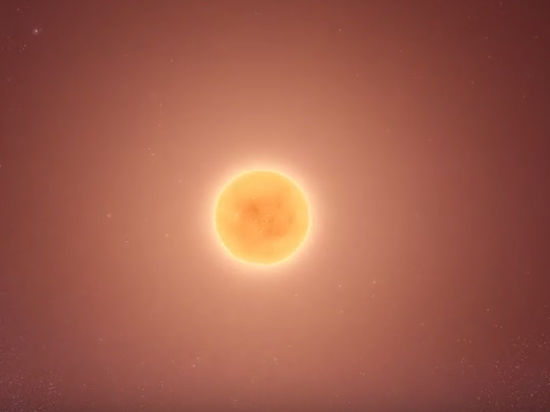
Photo: youtube.com
The star turns around Wolf 1061c, is 35th on the distance from us of all known stars. According to astronomers, this is a red dwarf Wolf 1061, having a spectral class M. In the orbit of the star found two more planets which, like Wolf 1061c, likely to be rocky, like Mars, rather than gas giants like Neptune passes sciencealert .com.
«As many as three of the planet, have a low enough weight to have a hard surface, have become exciting discovery – said the study’s lead author, Duncan Wright of the University of New South Wales. – The average planet, Wolf 1061c, is in the so-called “zone Goldilocks”, which means that it can be water and even life ».
Two other planets lucky few less – one of them in all likelihood, it is too hot for life, and the other – on the contrary, too cold. Only Wolf 1061c is close to the middle. We should not assume that the rest of this planet like ours – on the assumption of scientists, it weighs in 4,3 times more, is 10 times closer to its star and completes a full revolution around it in just 18 days. However, the proximity of the planet to the star is offset by the fact that the star itself is much colder than our sun. Scientists emphasize that unlike most red dwarfs, the star of this quite calm. This reduces the likelihood that life on the planet, if it exists, will be destroyed by X-rays or superflare.
At the same time there is also a potential problem – it is possible that Wolf 1061c constantly turned to its star one the same party, just as the Moon facing the Earth. In this case, the temperature on the “solar” side Wolf 1061c can be extremely high, and on the other – is extremely low. However, if the planet strong winds blow, the effect will be somewhat mitigated.
The scientists, whose work is published in the edition of The Astrophysical Journal Letters, plan to continue to monitor each of the three detected planets. In the future they hope to see the world on a background of the star – in this case, astronomers will be able to explore their environment.


No comments:
Post a Comment